


Driving an EV comes with many perks, some of which even owners themselves might not be aware of. One of these is bidirectional charging. So, what is bidirectional charging? During Hurricane Helene, thousands of homes were left without power. Residents had to stay for extended hours without electricity as utility teams tried to restore the damaged power infrastructure.
EV owners, especially those who drove large-capacity battery cars, were the most frustrated, knowing that there was energy stored in their vehicles, but they couldn’t use it. Even though EVs store substantial electric energy, most only support powering the vehicle and cannot be used as a power backup for any other use.
With that, I bet you’ve gotten a rough idea of what bidirectional charging is: a technology that lets EV drivers power other essential devices during power outages.
What Is Bidirectional Charging?
It’s exactly what it sounds like: two-way traffic for electricity. You can directly power another device from your EV or use a specialized wall box unit. While traditional charging allows one-way flow of power, bidirectional charging lets you charge your EV the normal way, or discharge the stored energy back to the grid, your home, or another device.
It’s a reliable source of power for families during emergencies, reducing the overdependence on traditional backup systems like generators and solar energy storage. As extreme weather events seem to increase, bidirectional charging is steadily becoming a necessity in EVs. Bidirectional charging cars like KIA, Ford, Hyundai, Tesla, and Nissan are at the forefront of including bidirectional charging capabilities in their EV models.
For instance, the Nissan Leaf comes with a bidirectional charging feature and requires EV owners to install a power supply unit in their homes to make use of it. With the Ford 150 Lightning, you can get up to 9.6 kW of power for your home for a couple of days through your home’s electrical panel. However, to use it, you need a 100 A circuit and the Ford Charge Station Pro.
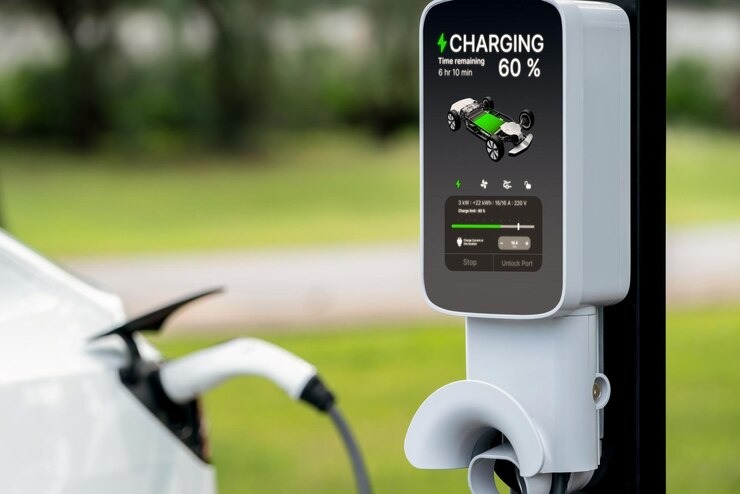
The Different Types of EV Bidirectional Charging
Bidirectional charging relies heavily on vehicle-to-Everything (V2X), allowing your EV to act as a power backup for other consumption end-points. Here are the different types of V2X:
Vehicle-to-Grid (V2G)
This pushes power from your vehicle back to the grid. V2G lets your EV communicate with the grid, allowing it to supply power whenever needed. This, in turn, helps the grid to maintain stability and reduce emissions. With the growth of renewable energy use, the V2G model can store the surplus energy from wind and solar, then discharge it into the grid when the demand becomes stiff.
For your home backup system and V2G system to manage the two-way flow of energy, you need a charge controller. The controller’s work is to regulate the energy from your EV battery to maintain a stable power output while preventing discharging or overcharging problems.
EVs that support the V2G capability include the Ford F-150 Lightning. This particular model requires Ford Charge Station Pro to manage and control the bidirectional charging. Other EVs include the KIA EV6. Nissan is yet to release a more affordable model that supports V2G, until 2026.
Vehicle-to-Home (V2H)
Keep your house powered during outages or peak hours. Here, your EV supplies power to your home electrical panel. V2H can be beneficial to homes in cutting down their utility bills by relying on your EV backup during peak hours, then switching when rates are lower.
Some bidirectional charging cars that support V2H include Volkswagen ID.4, KIA EV6, Nissan Leaf, and Ford F-150 Lightning. KIA EV6’s V2H system works in the same way as a generator setup. It connects a home’s distribution panel, allowing the vehicle to safely supply energy to the house.
Vehicle-to-Load (V2L)
Provide electric energy to other devices like power tools, camping gear, or other EVs. Vehicles with V2L capability can power other devices directly without requiring third-party adapters. Instead, these EVs have a DC-to-AC inverter (built-in) with standard outlets, so you only need to plug in your device, whether a tool or an appliance.
This feature comes in handy during outdoor events, power emergencies, or when working at a remote off-site location. Popular EVs with V2L capability include the Rivian R1T, Ford F-150 Lightning, Hyundai Ioniq 5 and 6, Tesla Cybertruck, and KIA EV6 and EV9. You’ll find different power outlets and levels in each of these EVs, making them useful on different occasions.
In other words, it is V2X that turns your EV into a dynamic energy player, not just a vessel for moving from one point to another.
Vehicle To Vehicle (V2V)
This bidirectional charging allows one EV to connect and charge another EV. This type of charging is useful in reducing range anxiety, especially when there’s no charging station nearby. It comes in handy when traveling in remote areas where charging infrastructure is limited. The charging is provided to allow an EV to reach the next available charging station.
Some of the EVs with bidirectional EV chargers are the Lucid Air and Ford F-150 Lightning. Most other EV makers are also working on this feature to give their line of EVs more flexibility and accessible to an even larger number of drivers.
Why All the Fuss with Bidirectional Charging?
Now that you know the answer to “what is bidirectional charging,” why is it getting all the attention now? Because it’s a total game-changer. America’s grid, and most other industrialized nations, are already under strain as energy costs are doing the usual rollercoaster. Bidirectional charging lets EV owners be more than just consumers; they’re now players in the energy ecosystem.
In California, for instance, utility companies are testing V2G programs that allow EV owners to sell excess energy back to the grid at peak rates. Here are other reasons why bidirectional charging is quickly gaining attention and how it benefits EV owners:
- Power backup for emergencies
How exciting is it to have power restored immediately after a blackout? But what if the outage lasts longer than expected? Such as the case of the 2021 Texas Power Crisis or the California public safety electricity shutoff that caused millions to stay without power for hours? If you have a V2H-capable EV, you can power the entire home during such outages without a problem. The number of loads and the timeframe of use will depend on the charge level and battery capacity.
- Save on utility bills
Use your EV’s battery to power your home during peak-rate hours and avoid paying those sky-high evening prices. Then use the off-peak hours to recharge your EV for your daily use and peak hours.
- Earn Extra Cash
Some utility programs allow those with surplus energy, either from solar power systems or EVs in this case, to feed it back to the grid for some financial incentives.
What Are the Downsides of Bidirectional Charging?
Bidirectional charging offers numerous perks. But we cannot just gloss over challenges. At the moment, the following are the challenges that users have to deal with. With time and more research, these challenges can be overcome.
- Battery Degradation
Recharging and discharging (cycling) your EV batteries too often can hasten their degradation, leading to a reduced lifespan overall.
- Compatibility
Not all EV makers in the market are producing their vehicles with the bidirectional charging feature. Plus, not all EV owners’ homes are ready for V2X; you’ll need inverters, permits, and some rewiring. This reduces the adoption rate of the technology, since it highly relies on compatible EVs.
- Grid Stability Issues
Bidirectional charging brings another variable to the functionality of the grid. For instance, vehicles may return surplus energy at unexpected times, posing a challenge in maintaining the reliability and stability of the grid.
- Potential Energy Losses
Bidirectional charging involves energy conversion from DC to AC, and with this comes energy loss. Overall, it reduces bidirectional charging efficiency as opposed to one-way charging.
- Cost
Setting up bidirectional charging isn’t cheap. After acquiring an EV with the features, you can expect to spend upwards of $3,000.
Is Bidirectional Charging Worth the Hassle?
The short answer is yes, if you’re an early adopter, tech-savvy, and just love the concept of energy independence.
But for the average Joe, it’s still a bit niche. No need to worry, though, because the concept is gaining momentum quickly. Government incentives, falling hardware prices, and the growing list of bidirectional charging cars mean it’s going to become mainstream sooner.
The future we’re headed for is one where it’s not about going farther on a charge. It’s about what else that charge can do for you.
Final Thoughts
By now, you’re probably asking more than just “what is bidirectional charging?” You’re likely wondering, “Why didn’t we implement this sooner?” The truth is, with the world rushing to make EVs a standard mode of transportation (salute to Norway for leading the way), bidirectional charging will become the norm.
Bidirectional charging will make vehicles more than what they are now: they’ll become a mobile battery, a power backup, and even a side hustle.