


Electric cars are here with us, and more people (four out of ten) are considering an electric vehicle (EV) as their next purchase in the US. As EV numbers keep rising, public charging stations have yet to keep up with this pace. Even the more advanced electric cars like Tesla Model 3 still need more charging time than fossil fuel-powered vehicles need to fill their tanks.
This creates a room for confusion and other EV charging etiquette problems at charging stations. So, when it comes to charging EVs, there are unwritten social codes to follow so everything doesn’t turn chaotic. Just like we’ve all agreed not to clip our toenails on planes, the same etiquette should be adhered to when charging EVs.
But Why Bother Yourself with EV Charging Etiquette?
Have you ever found yourself standing awkwardly at a station, wondering whether it’s alright to unplug someone else’s EV left there longer than usual? Or left your car charging overnight at your workplace? Then you’ve already brushed up against EV charging station etiquette.
With more EVs on the road than public charging spots, etiquette is the only thing that keeps things civil. This applies especially at high-demand public stations, workplace chargers, and Tesla Superchargers. Lack of courtesy and common sense can turn everything chaotic. Charger hogs, long queues, passive-aggressive sticky notes on windshields, et al.
But like we mentioned earlier, these rules governing code of conduct are not written anywhere; they all depend on people to use common sense. So, let’s break down these dos and don’ts of public charging stations.
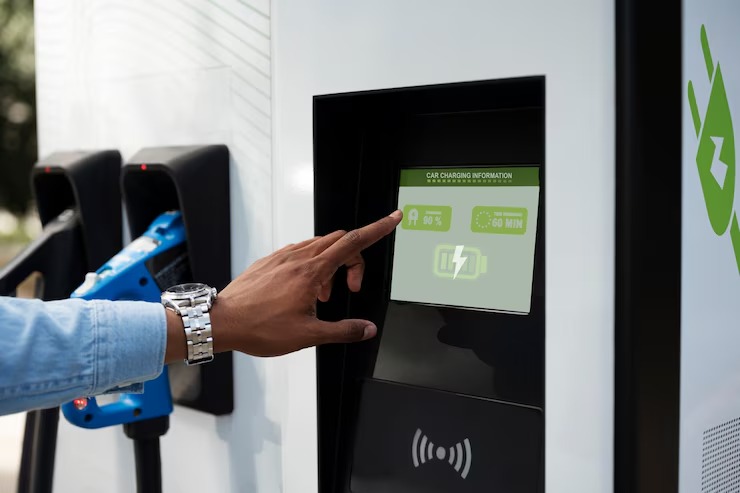
EV Charging Etiquette 101: The Unwritten Do’s and Don’ts of Public Charging Stations
Now that we’ve brought you up to speed on the importance of maintaining civility at public charging stations, what are you allowed to do? Something might seem okay to you until all the eyes surrounding you start giving you a “Are you nuts?” stare. So, here’s how to avoid such incidents or even worse, get into an altercation with fellow EV drivers.
Don’t Hog the Charger
Okay, some may do out of lack of knowledge that charging slows down drastically after 80%. At this level, your car has enough juice it needs to get you back on the road. Hogging the charger until your battery hits 100% isn’t helping much, but wastes your time. Besides, for optimal battery health, maintaining a charge level between 20% and 80% is recommended.
And if you think hogging’s no big deal, think again. Many charging networks (like ChargePoint and EVgo) apply idle fees after your session ends. That’s right—you’ll be charged for not moving your car.
Public Chargers Aren’t Parking Spots
Your car’s charge is at 40%, and you need somewhere to park as you run errands on foot. Oh, why not leave it charging as you do your thing? It’s more like booking a table at a restaurant simply because you want to use their Wi-Fi. It looks wise, but it’s cheeky and a surefire way to annoy someone.
For charging points with high demands like Tesla Superchargers, turnover is critical. Here, arming yourself with Tesla supercharger etiquette will not only help maintain order, but can also save you some money from the fees charged for idling. Yes, that’s right; Tesla applies idle fees to encourage EV drivers to move their cars immediately after charging. So, whether you’re running errands or grabbing a flat white while your car charges, keep checking your app so you don’t overstay your welcome.
First Come, First Charge
When chargers are scarce and there’s a line, it’s a simple game of first come, first plug. No cutting. No sneaking in because “you only need 10%.” Some stations have apps or screens that show who’s next. But when in doubt? Just ask. A little communication can prevent a lot of road rage.
Also, don’t be the person who pulls up and leaves their car “waiting” in the spot while they shop. It’s not a deli counter. Take a number mentally and wait in line properly. If you must run an errand while your car waits its turn, then leave the car to someone else while you do your thing. But under no circumstance should you leave your car in queue to do other things elsewhere.
Follow EV Charging Etiquette at Workplaces
We’re all used to following rules and regulations at our workplaces, so there’s no harm in adding EV charging etiquette to your list of dos and don’ts at work. It’s even more important to adhere to these rules because here, there’s more at stake because you’re dealing with colleagues, employers, and stakeholders, not randoms. So, diplomacy matters.
Here are a few important EV charging etiquette at work:
- Rotate: If there aren’t enough chargers at your workplace for all EVs, don’t hog a single spot all day. Take a few hours at one spot, then move your car to a regular bay.
- Schedule your charging: Don’t just barge in and plug your car. Follow the protocols; some offices have signup sheets or booking apps like ChargeLab that employees use.
- Communicate: It doesn’t hurt to stick a note saying, “Feel free to unplug me after 11 am.” It looks simple, but it can work wonders.
- Don’t unplug without consent: Even when all you need is just a 20% boost, don’t touch someone else’s charger without asking first, unless there’s a note giving you a go-ahead.
Remember, you don’t want to be that guy causes Slack drama over an EV charger.
Never, Ever Unplug Someone Without Permission
We’ve talked about unplugging a charger without permission at workplaces. The same applies at public charging stations. Unless the driver stuck a note on their windshield that gives you an OK to unplug, you shouldn’t. You have no idea if they’re charging in readiness for a long trip or if they’re getting ready to unplug it any minute.
Unplugging someone’s car without permission is not only rude but can be risky. It can cause error messages or send alarm notifications to the owner. When it’s your turn, always unplug the electric car charger carefully by pressing the release button before removing the connector to avoid damage to the port or cable.
Keep Cables Tidy and Accessible
Another EV charging etiquette to adhere to is keeping things tidy. You wouldn’t leave a garden hose strewn across the pavement, would you? Cables left blocking walkways or tangled are a tripping hazard and can be a real hassle to deal with.
Once you’re done with charging:
- Coil the cable neatly.
- Hang it back on the holder if there is one.
- Leave the spot cleaner than you found it.
It’s the little things such as these that go a long way, especially in busy charging locations where several people use the same equipment every day.
Don’t ICE the EV Charging Spot
No, this has nothing to do with frozen roads. ICEing refers to internal combustion engine (ICE) vehicles parking in EV charging spots. If you’re driving a petrol or diesel car, those spots are off-limits, no exceptions.
But even fellow EVs can “ICE” if they park in a charging bay without using it. Again: it’s not a parking space. If you’re not plugged in, you’re taking up valuable real estate.
Some places have started ticketing ICE offenders (and EV squatters), so beyond being inconsiderate, it might actually cost you.
Tesla Supercharger Etiquette
Tesla has over 60,000 Superchargers spread across the globe. Tesla Superchargers are one of the fastest, the reason they’re often busy. So here are a few extra etiquette pointers for Tesla owners (and now non-Tesla EVs too, at some open stations).
- Don’t hog chargers so you can charge to 100%. It’s slow and blocks the queue.
- Share the load. Some stalls share power with the one next to them. So, if possible, leave the space if only a few spots are occupied.
- Use the Tesla app for accurate charging updates, to find stations, and to get notified when you’re ready to go.
More importantly, don’t take a nap in your car as you wait for a spot to be free. It’s not a rest stop.
Queue At the Correct Plug
This is more about planning yourself than EV charging station etiquette. Before heading to a charging station, know in advance which one specifically you’re going to. Also, find out if they have compatible chargers. Use EV charging network apps from providers like Electrify America, EVgo, and ChargePoint to find compatible charging spots.
Ensure you queue at the right plug-in point. If your EV doesn’t support DC fast chargers, then find a Level 2 station.
Report Any Anomalies, Like Broken Chargers
If you’ve been using an EV for quite some time, you probably have noticed that DC fast-charging stations of today are not as reliable as they were back then. It’s now becoming common to find that some of the chargers are not working at all.
As a responsible EV driver, if you encounter a broken charger, it’s good practice to report it to the persons in charge or the network operator. You can also post it on apps like PlugShare so other EV drivers know about it and plan routes accordingly.
Final Thoughts
As the number of EVs keep rising each day, it’s EV charging etiquette that’s going to help us keep things sane. How EV drivers behave is now more important to maintain civility amid low number of chargers and growing number of electric cars.
Remember that charging station etiquette isn’t about reducing queues or keeping cables tidy. It’s about respecting fellow EV drivers, public infrastructure, and the ever-changing culture in the transportation sector.
So, whether you’re charging at work, Tesla Supercharger, or cruising through town, don’t forget that charging right is an important of smart EV driving.