


Planning to sell shortly and wondering, “Does EV charger increase home value?” It’s a basic tenet of property ownership that improving it boosts its market value. So, installing an EV charger is more like adding a swimming pool in your backyard, when it comes to property valuation. They all add value.
As EV popularity continues to grow across the country, new property buyers will soon be going after homes with electric car chargers. In 2024, battery and hybrid electric vehicles make up about 7.3% of all light-duty vehicle sales. And that number keeps rising.
Meanwhile, some states, like California, have already committed to banning internal combustion engine (ICE) vehicles by 2035. Others, including New York, Oregon, Vermont, and Washington, have already adopted California’s Advanced Clean Cars II standard. This means the EV wave is sweeping across, and adding a charger now future-proofs your home and may also boost its market appeal and value.
The Relation Between EV Chargers and Housing Prices
To better understand how installing an EV charger can impact your property value, let’s review what’s already happening on the ground. A study in the Nature Sustainability journal researched the impact of EV charging infrastructure and property value in California’s housing market.
It was determined that houses within 0.6 miles (1 kilometer) of an EV charging station may record up to a 3.3% value increase compared to those that didn’t have a charging spot nearby. Properties that are within a 0.2 – 0.3-mile radius from a charging infrastructure may experience even a higher value increase, up to 5.8%.
Also, a data comparison on the market between 1993 and 2021 was conducted to determine how EV charging network expansion has impacted the housing market. Generally, homes that had EV charging infrastructure recently built near them experienced a value increase. Now, if having a charging station nearby increases the value of a property, imagine how your home’s worth would increase if it had its own charging infrastructure?
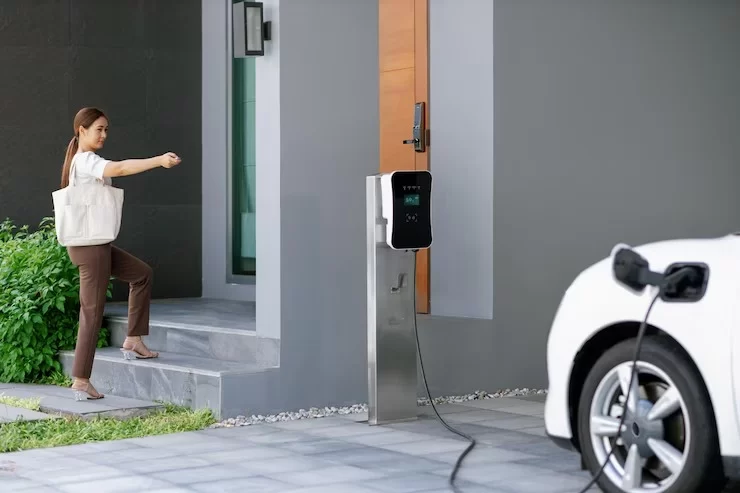
How Installing an EV Charger Boosts Your Home Value
We can confidently answer yes to the question, “Does EV charger increase home value?” But how does this happen, really? Here are some of the points you need to understand about how installing an EV charger will make your home more valuable.
- Growing Buyer Demand
Nationally, only 0.9% of homes were categorized as “EV-friendly” in 2023, and that’s an increase from a mere 0.1% just five years back. This trend shows that more homebuyers are increasingly going after properties that are already equipped with EV charging infrastructure. This is becoming more common as remote work and sustainable lifestyles are also growing in popularity.
- Faster Sales, Stronger Appeal
When you’ve listed your property for sale, you not only want it to fetch the highest market price, but also want it gone fast. Well, installing EV is more like a two birds, one stone scenario. It’ll help your property sell at its best price, quicker. According to Realtor.com, EV-ready homes spend nine fewer days on the market on average. In highly competitive markets like Boston and Chicago, listing a property with an EV charger gives the seller a clear edge.
- Buyers Expect Homes To Be EV-Ready
Still asking, “Is it worth installing an EV charger at home?” Well, buyers expect a property to be EV-ready, so yes. With EVs becoming mainstream, prospective buyers are increasingly asking whether properties have an EV charging point. This demand is expected to strengthen as new buyers find EV charging infrastructure to be a crucial factor.
- A Smart, Future-Proof Upgrade
Generally, overall conditions of a property and its location still dominate the price of homes, so installing an EV isn’t a guarantee for huge returns. That’s because some remote locations may not readily value it now. However, the trend is crystal clear: EV charging infrastructure is a key selling point.
Even if the monetary value increment is modest, installing an EV charging point sets your property apart in the competitive housing market. It’s even more likely to speed up the sales process if the new buyer drives an EV or is in the process of acquiring one.
- Enhance Sustainability Value
Does EV charger increase home value? Yes, but it’s not just about monetary value. EVs have become a popular mode of transportation for meeting the UN Sustainable Development Goals because they’re environmentally friendly. They have almost zero carbon emissions. If you already have a solar panel system or are planning to install one, connecting it to your EV charger can bring you closer to keeping your carbon footprint near zero.
While the initial cost can be daunting, through EV charger tax incentives and savings in fuel cost, it’s possible to recoup your expenses. Additionally, charging your EV after peak hours can help reduce your utility costs even further.
- Improve Your Property’s Equity
Ask around and you’ll discover that most homebuyers are constantly prioritizing more energy-efficient properties. With this trend ongoing, EV charging infrastructure will have a significant role to play in the housing market.
Research shows that homeowners can increase their properties’ overall value by a whopping $50,000 through installing an EV charging infrastructure. This will set your property apart in the market, allowing you to advertise it as an additional luxury to attract potential buyers.
- Convenience-Based Value Boost
It’s almost impossible to gauge the value of convenience; however, its importance can never be understated. Having a charger at home saves you a lot of hassle involved in driving around looking for a charging spot, then queuing for your turn.
Even if you have a Level 1 charger, it’s still better than having none at all. You can simply leave your car to charge overnight, which is about 8 to 12 hours. This may not give you enough range for long distance trip, but it is sufficient for daily use. Now, if it’s a Level 2 charger, it’s more than enough if you plan your charging time well.
If you have more than one electric car, such as a fleet, you may consider installing a fast charger such as the Omega DC Fast Charger. It’s a scalable EV charger that can output between 120kW to 320kW, allowing you to charge several cars within a short time. Plus, Charge Rigs, the name behind these modern EV chargers, offers complete installation package and financing, making it easier to install a charger, whether for private or commercial use.
Do You Need Permission to Install an EV Charger in Your Home
One of the biggest hurdles to carrying out property improvements is seeking plan approvals from the local governments. This tends to scare some homeowners, making the process take a bit longer. Is it the same case with installing an EV charging infrastructure? Here’s what you need to know.
In most cases, installing a home EV charger is far less complicated than doing a major renovation. Plus, the approvals are typically straightforward, especially if it’s a case of single-family homes with private driveways or garages. The local building departments may require a simple electrical permit, just to confirm that your setup adheres to safety standards and won’t overload your home’s electrical system.
For apartment and condo dwellers, the process can be trickier. You’ll likely require written approval from the HOA or property manager. The installation may also depend on parking arrangements and shared infrastructure. Thankfully, many states, including California, Florida, Colorado, and Oregon, have “Right to Charge” laws that prevent HOAs from denying your request, as long as the required conditions are met.
Before getting started, do some checks with your local city or county office and hire a licensed electrician who understands EV electrical installations. They can help you pull the required permits to ensure all is up to code. At first, the process might seem daunting, but with EV movement becoming more popular, local authorities are becoming more supportive. That means there are fewer hurdles in processing charger installation requests.
The Cost of Installing an EV Charging Point on Your Property
Now that we’ve answered the big question, “Does EV charger increase home value,” how much will it cost? Most residential properties go for Level 2 charging as it’s moderately affordable and offers practical charging speeds. The cost of acquiring and installing it will depend on the type of unit, the placement, and the actual installation.
The whole process, from buying a charger to installing it can cost from as little as $300, up to $1,200 for a Level 2 charger. Here are two factors that may also affect the cost:
- Need for electrical panel upgrade: A Level 2 charger needs a minimum of 240V AC power. If your home is based on the 120V AC electrical panel, then an upgrade is certainly needed. As such, your costs may change.
- Professional electrician’s fees: Different electricians will charge differently. Compare quotes from multiple certified professionals to find one within your budget.
Don’t forget to check your eligibility for local and federal EV charger tax incentives to help bring your overall cost down. This incentive can be up to $1,000, covering the cost of the EV charger, components, and installation fees.
Conclusion
Does EV charger increase home value? The answer is a resounding yes, considering that your property is within an area that new homebuyers have are increasingly seeking EV-friendly homes. And since EV adoption is rapidly expanding, it’s without a doubt that equipping your property with a charging infrastructure can boost its monetary as well as sustainability and convenience value.
Do you have a larger fleet of EVs and are considering installing a DC fast charger? Charge Rigs offers lucrative deals on powerful EV charging solutions for mobile and permanent installations. Check out the Omega and Flexx Mobile DC Fast Chargers plus the care and finance options available to get started.