


You’ve heard of electric vehicles (EVs) being referred to as “zero-emission vehicles,” but are EVs better for the environment? That’s the spectre stealthily haunting the future of sustainable transportation. What if the real truth is that they don’t achieve their main agenda of reducing global carbon emissions?
Electric cars produce significantly less, near-zero emissions, but we can’t say the same for the manufacturing process of the batteries that power them. Making EV batteries requires a huge amount of energy (mostly unclean), which has detrimental effects on the environment.
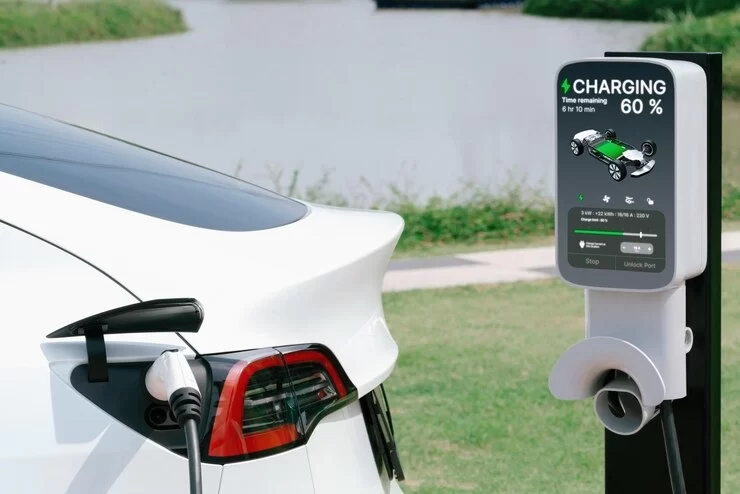
But can we say that this environmental damage is compensated for by the green perks of letting internal combustion engines (ICE) go? Here, we take a deep look into the big questions like “how green are electric vehicles,” and whether we’re on the right track to cutting global carbon emissions with EVs.
Gas Vs Electric Cars: Environmental Impact
Pollution from ICE vehicles isn’t just limited to what the tailpipes throw outside; it goes way back, from the gasoline manufacturing process, which includes mining, refining, transportation to gas stations, and more. All these processes emit a lot of carbon and cause environmental degradation. Today, most gas vehicle manufacturers have included technologies (catalytic converters, better engine designs) that reduce carbon emissions, but still, the harm is there, especially if you factor in fuel production.
According to the US Environmental Protection Agency (EPA), an average ICE passenger vehicle releases approximately 4.6 tons of CO2 annually. That’s from the daily driving, and you’ve not factored in oil extraction, refining, or the transportation.
That’s not to say electric cars are flawless. How much CO2 does an electric car produce per year? Here’s where things get interesting. Even with electricity generation factored in, EVs produce less than half the carbon emissions that a similar ICE vehicle produces over its lifetime. And if you consider regions that have made great strides in clean energy use, like California and New York, that figure is even lower. So, yes, are EVs better for the environment? On the road, without a doubt.
But what about the electricity that powers these EVs? Critics have pointed out that if you charge your EV with electricity generated from a coal-powered grid, you’re not saving the planet exactly. That sounds fair, right? But the grid is getting greener each year. The US Energy Information Administration (EIA) says that renewable energy sources contributed 20% of the total electricity generated in the US between 2020 and 2021. This number is projected to grow steadily.
Are EVs Better for The Environment, Really?
Here’s where things get nuanced. If you want to know how green are electric vehicles, it depends on where and how they’re manufactured, charged, and recycled. That takes us to the single most important component of EVs that raises questions when it comes to EV sustainability: batteries.
Most EV batteries contain lithium, nickel, and cobalt, and mining these elements is energy-intensive. It’s often ethically murky. A 2021 report by Amnesty International highlighted issues of child labor in the Democratic Republic of Congo, where cobalt is mined. Besides this, we can’t fail to note the effects of mining on the environment.
However, battery technology isn’t stagnant; it’s evolving rapidly. Companies such as Tesla and Ford have shifted to cobalt-free batteries. Meanwhile, an MIT (Massachusetts Institute of Technology) research suggests that even with battery production accounted for, the overall carbon footprint of electric vehicles is still lower over their lifespan than that of their gas counterparts.
Another important factor to consider in answering, “Are EVs better for the environment?” is longevity. EVs generally require less maintenance since they have fewer moving parts. This means fewer parts replacements and less oil means no oil changes. Over time, all these little perks add up to a significantly lower environmental footprint. Of course, without forgetting lower costs for drivers.
The Pollution Equation: Tailpipes Aren’t the Whole Story
Whenever you hear critics point fingers at EVs, the claim is always based on the battery manufacturing process and electricity generation. These are valid points, no doubt. But what’s also important to note is that pollution isn’t just carbon emitted; ICE vehicles also produce other toxic substances like nitrogen oxides and particulate matter.
These are linked to respiratory diseases and smog. The American Lung Association highlights that switching to EVs could help prevent over 18,000 premature deaths in the Southeast alone and produce $1.2 trillion worth of public health benefits nationally. This is just in the US alone.
EVs may not be perfectly green now, but compared to ICE vehicles, they’re more than just a step forward—they’re a leap. What’s more important now is to continue cleaning the process of manufacturing EVs, including the materials like the battery that power them.
A Broader Perspective on EVs’ Lifecycle Emissions
So, how much emissions do electric cars produce? To answer this, let’s zoom out. An EV’s full lifecycle involves the mining, manufacturing, vehicle use, and finally, disposal. According to a 2020 International Council on Clean Transportation report, electric cars in Europe produce 66 to 69% less CO2 over their lifetime when compared to ICE cars. This still holds even if you consider the dirtiest coal-powered grids.
Here in the US, where renewable energy is increasingly powering the grid, the numbers are also getting better. EV battery recycling is taking shape with startups like Redwood Materials taking charge. We expect things to get better over time.
The Hidden Costs of EV Environmental Impact
Switching to EVs might feel like slapping a “green” sticker on your conscience and calling it a day, but let’s not get too comfy in our Tesla-shaped bubble. The gas vs electric cars environmental impact debate doesn’t end at tailpipes and kilowatt-hours. There’s an entire backstage of hidden costs that don’t show up on showroom windows or in flashy ads.
Let’s begin with the rare earth metals. Instead of engines, EVs use powerful motors that rely on dysprosium and neodymium. The mining process of these elements can lead to environmental degradation, such as deforestation, soil erosion, and even radioactive waste.
A report from The Natural Resources Defense Council (NRDC) states that rare earth mines are found in countries with minimal environmental regulations. This creates a pollution hotspot and the displacement of local communities. That’s just a part of it.
Then comes the pressure on the grid. In 2022, over 1.6 million EV sales were recorded in the US, and this means the demand on the grid surged. While the grid is getting cleaner, growing demand, and the fact that it’s getting older, there’s a risk of overloading the infrastructure. Especially if charging isn’t managed wisely. And this could inadvertently lead to increased use of fossil fuel at peak times.
So, the answer to “how much pollution do electric cars produce?” might also depend on when and where you’re plugging them in.
The End-of-Life Issue
Another aspect of how EVs impact the environment is what happens when they reach the end of their life. EV batteries are chemically complex, so they aren’t easily disposable or recyclable. At the moment, only a small percentage of lithium-ion batteries can be fully recycled. While companies like Redwood Materials are making big steps in this domain, the global capacity for EV battery recycling is still trying to catch up.
This leads to another important question: “What happens when these EV batteries aren’t properly recycled?” It could lead to toxic leakages, groundwater contamination, and more challenges on where to dump the batteries.
To be fair, ICE vehicles aren’t innocent either. The oil drilling process comes with a full bouquet of environmental sins, from oil spills, methane leaks, and ecological destruction. The key difference is that EVs’ environmental cost is slowly repaid with time. But for gas vehicles, the costs remain intact.
A Summary of the Pros and Cons of EVs
Just to make all the points we’ve addressed about “Are EVs better for the environment?” let’s summarize the benefits and downsides of EVs.
Pros
- EVs produce no CO2 when being driven. This means they contribute to a huge reduction in carbon emissions. On average, driving an EV helps reduce 1.5 million grams per year of CO2.
- Electric cars need less energy to cover the same mileage as ICE cars since they have fewer moving parts. Also, EVs have regenerative braking to help regain energy when applying brakes. This reduces wear and tear compared to conventional disk brakes.
- EVs contain about three times fewer fluids, unlike gas vehicles that need engine oil, coolants, and transmission fluid that need replacement regularly.
- Charging an EV is generally way cheaper than filling a gas tank.
- Cleaner air means healthier lungs. A large-scale transition to EVs could help reduce respiratory diseases and premature deaths associated with ICE vehicle pollution.
- EVs come with cutting-edge technology, including instant torque and futuristic dashboards. Also, there are tax credits, rebates, and HOV lane access to sweeten the deal for American EV buyers.
Cons
- Battery’s environmental impact: Manufacturing EV batteries involves mining lithium, cobalt, and rare earth metals, which can cause deforestation and toxic waste. It even raises human rights concerns in nations with lax regulations.
- Wider charging infrastructure gap: Although the charging network is improving, the infrastructure gap is still wide. Long-distance trips require proper planning and patience.
- Grid strain: Strain on the grid is a concern, considering there’s an increasing EV adoption. Also, if your energy comes from a coal-powered grid, then your environmental edge reduces considerably.
- High upfront costs: Even with tax breaks, EVs have considerably higher sticker prices than their ICE counterparts. Battery replacement can be costly.
- End-of-life recycling issues: EV battery recycling is still developing. Improper disposal increases the risk of environmental hazards.
Final Thoughts
Generally, are EVs better for the environment? Yes, they are, but the perks don’t come without caveats. In this age, electric cars are cleaner on the road, but when you zoom into it’s entire lifecycle, which also includes the battery manufacture, things take a different turn.
Even then, the overall CO2 emission of EVs’ full lifecycle is considerably lower compared to that of gas-powered vehicles. This means that the benefits of EVs on the environment kind of cancel out with the downsides. And like most good ideas, they work best if paired with thoughtful policies, ongoing innovation, and a clean energy grid.