


As the sales of electric vehicles (EVs) continue rising, charging stations’ reliability is more important than ever. Whether you’re an investor, stakeholder, or EV driver, knowing EV charging issues can help you plan well. Reliability, compatibility, and payment convenience are what set networks like Tesla Superchargers apart from other networks.
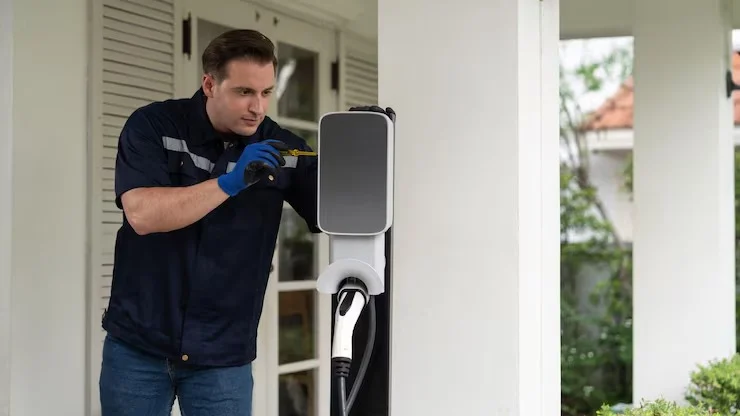
In this comprehensive guide, we take a deep dive into what challenges public EV charging stations face and what needs quick addressing.
Problems with Public Charging Infrastructure
If you’re a new EV driver planning to use public charging stations before installing your own at home, what problems are you most likely to face? For stakeholders, which issues face most public charging infrastructure, so you can avoid them and make your business more attractive to drivers?
Charger Reliability
No one wants to deal with a charger that fails relentlessly. When you’re in a hurry and drive into a charging station only to find that their chargers are acting up, it can really be frustrating. Next time, you’ll be avoiding that station like the plague.
Unfortunately, charger reliability for public infrastructure is common, coupled with frequent malfunctions. Due to software glitches or a lack of adequate maintenance, sometimes they experience outages. Problems such as cracked screens, broken connectors, or billing issues are also common.
How do these problems affect a charging station? This leads to a lack of confidence by customers who get frustrated by faulty chargers when they need them the most. Eventually, it can cause abandonment of that station and even affect EV adoption.
Compatibility issues
Charger compatibility is among the most common EV charging issues that impact quick adoption. Different automakers have different charging connectors and protocols, and this can give rise to compatibility problems between EV charging stations. Understanding the various EV charger connector types is essential, as they directly determine which vehicles can use a station and how seamlessly charging sessions begin. Some of the standards that have been in use in the past include CHAdeMO and CCS. Some EVs still use them, though NACS (used by Tesla) has recently been adopted by most leading automakers. For those automakers still using CCS or even the old Japanese standard (CHAdeMO), it creates issues that affect drivers in the long run.
Impact: Charging standards incompatibility only leads to further frustrations and inconvenience among drivers. Imagine driving to a station only to find that they all use NACS while your EV only accepts CCS connectors. This also affects the rate of EV charging infrastructure expansion because operators are forced to support different standards.
Power limitations
The grid in most countries, let alone the United States, wasn’t built to support high-power EV charging that the market is currently ushering in. With the number of such EVs growing, more strain is added to the local as well as the national grid.
Fast chargers with up to 350kW power output draw too much power within short time spans, and this can cause localized power bursts, further leading to localized shortages. In other cases, it can even overload the grid, especially at peak hours. This partly explains why charging at peak hours is way more expensive.
What’s the impact of grid capacity limitations? With EV adoption rising each day, without proper planning and grid expansion, power reliability issues could arise. And the problem can worsen, especially for regions where the grid wasn’t crafted for such high-power demands.
Speeds
We’re in an era where we have high-output chargers that can deliver up to 350kW of charging power. One such charger is the Omega DC Fast Charger, built with a modular design and OCPP integration.
Likewise, most home and public chargers can only deliver Level 1 and Level 2 charging speeds. And these can take a lot of time to fully charge an EV or even attain the recommended 80% level.
Impact: When most of the chargers readily accessible can only offer slow charging speeds, it really affects the convenience of charging EVs for long trips. Also, whenever drivers need quick top-ups, they can’t get them. While there’s a rising demand for fast-chargers, their distribution is still lower, and for those available, they can be expensive.
Limited Charging Bays
Even though we’re in the age of EV revolution, sadly, some areas still lag in adoption because they lack charging infrastructure. This is one of the most common EV charging issues when it comes to adoption rates. Fewer investors are considering putting up charging infrastructure in less populated areas. So drivers in such areas have to constantly battle “range anxiety.”
What’s the impact of limited charging bays? It affects the mass adoption of EVs because interested buyers are concerned about where they’ll get a charger when they need it most. Most urban areas have well-developed EV charging infrastructure compared to rural regions, and this leads to geographical gaps in EV adoption.
Insufficient lighting or safety
According to a study by Geotab, the lack of safe EV charging stations is among the hindrances to EV adoption. Safety concerns raised on the matter include the lack of properly lit stations and stations located in remote areas. While the issue of safety is a big concern, especially among women EV drivers, its impacts are felt across the board.
Impact: When the number of EVs adopted is low because of safety concerns, it makes it harder for new investors to set up new charging spots. Strict government requirements about a charging station’s safety can help enhance security and lead more people to feel confident about owning an EV. Stations should be forced to have every corner well-lit, CCTVs within view, and emergency buttons within the station in case of a safety concern.
Problems With The Charging Equipment
Before throwing the blame on your car because the new shiny charging station seems efficient, sometimes the problem is the charging equipment itself. On the outside, most public EV chargers look just fine, but deep within, they hide all sorts of problems. Here are some of the EV charging issues you’re likely to face with charging equipment:
Broken Connectors and Cables
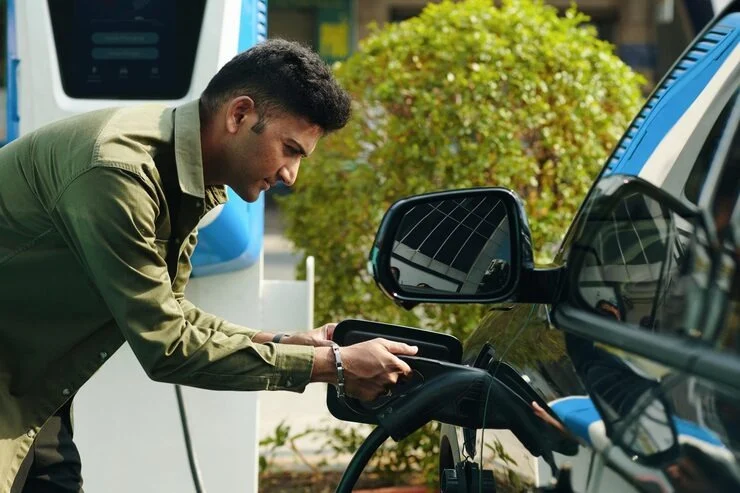
Nothing ruins your day when you drive into a charging station with charger availability on the network app, only to find connectors dangling. It’s easy to blame the network operators, but also, we should also acknowledge the amount of beatings these public chargers have to take: careless users, vandalism, bad weather, you name it.
With frequent use and poor handling, over time, the cables crack, fray, or become stiff, especially if you live in Tundra-like weather. When the connectors can’t latch properly, the charger either won’t start or refuse to charge mid-session because it’s a safety risk.
Faulty Charging Ports or Pins
If the problem isn’t the cable, then it could be the port itself. due to mishandling, the pins get bent, dirt builds up, and sometimes they corrode. When the pins are misaligned, the charger shows “communication errors,” leaving the drivers stranded.
A faulty charging port pin can also damage your EV’s inlet if you force the plug in (of course, people do that). And when a port becomes problematic, the station’s reputation can be ruined so fast. After two or three failed attempts to charge, drivers often don’t return.
Voltage Fluctuations
The grid serves many homes and businesses with varying energy requirements. Due to this, voltage fluctuations are common. But there are standard kW requirements to charge EVs, depending on the charger type, but voltage fluctuations can prevent the station from delivering that consistent power throughout the charging session. When power spikes or dips because of a heavy local demand or grid instability, the EV charger reacts almost immediately. Some may slow down the charging session while others cease to work just to protect the vehicle.
Whichever of these two cases happens, the driver remains stranded, wondering why the charging stopped or dropped suddenly from 150kW to 5kW. These fluctuations not only affect drivers, but the charging equipment as well. Repeated spikes strain the charger’s internal components, leading to early wear or regular maintenance calls.
Overheating Components
DC fast chargers like the 120kW-rated FLEXX Mobile DC Fast Charger are just amazing; they get your car ready to go with their enormous charging speeds. But pushing lots of power within a short time doesn’t come cheap; a lot of heat is generated in the process, and it has to go somewhere.
Getting rid of the excess heat can become a problem when cooling fans fail, vents are clogged, or charging equipment is under direct sunlight. When things get too hot, the charger automatically slows everything down or shuts down completely to prevent permanent damage. Drivers are affected right away; a 20-minute stop to top up suddenly becomes 45 minutes, and eventually the session ends with a warning message.
Operators are also affected because overheating affects the equipment components, forcing regular replacement of boards, fuses, and the entire module.
Problems with Payments and Apps
Payment problems are one of the most frustrating EV charging issues for drivers. They’re just as annoying as dealing with a dead charger. And when charging at a public EV charging station, you’re bound to come across payment issues because the systems can be glitchy, confusing to use, or just unreliable. Here are the common payment problems you’re likely to encounter at public charging stations:
Payment Failures
A charger that refuses your payment method for no reason can kill your mood so fast. One minute it accepts your card, the next, it behaves like it has never seen it before. This can be due to so many underlying problems, such as dirty card readers, terminal freeze, or back-end system misfire.
The impact of this is that drivers drive off annoyed, and the operator loses money as the station slowly builds a bad reputation, “the one that never works.”
Slow or Buggy Apps
Another common problem with public charging stations is buggy or slow apps. Slow loading screens, frozen maps, or a forgotten password reset that doesn’t work. Sometimes it can also be a “session failed to start” error. When these problems pop up, the whole charging experience becomes poor.
Multiple Accounts Required
Sometimes, networks can just be frustrating for no reason. Imagine driving into a station only to discover that you don’t have their app and account. Soon, you end up with so many apps and accounts with forgotten passwords. Worst of all, the charger won’t accept your card lest you have the “right” app installed.
This explains why some drivers opt to use only Tesla Superchargers: a single app, one network, and no circus.
Non-Transparent Pricing
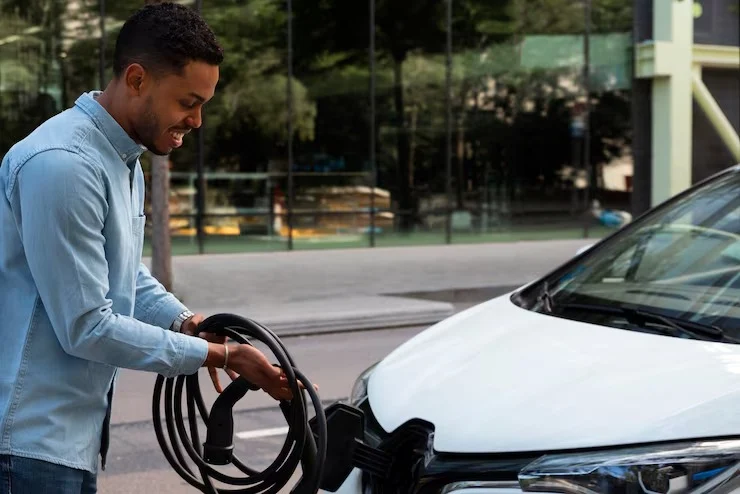
Everyone wants to pay prices they’re certain about. However, charging networks can bury fees behind their tiny menus. Sometimes they can just surprise you with “idle fees,” “session fees,” or peak-hour pricing. You end up paying heftily for a top-up session that should cost you a few dollars. This lack of clarity makes it difficult for drivers to estimate the true cost to charge electric cars, turning what should be a simple top-up into an unexpected expense.
Non-transparent pricing is among the leading EV charging issues that cause distrust. When drivers no longer have certainty over what they’re going to pay, they simply stay away from your station. Even if you have fast chargers.
Conclusion
There’s no denying that EV chargers are important for the ever-expanding EV market. But they face a lot of challenges that hinder adoption rates. These include inconsistent standards, charging speed problems, infrastructure limitations, high costs, and grid constraints.
As an EV charging station investor or stakeholder, addressing these EV charging issues is an important investment in efforts to make EVs more accessible and reliable. Before starting your charging station setup process, find a reliable partner that can guide you to avoid avoidable problems. Check out Charge Rigs’ dealer partnership offers to help you get started quickly, efficiently, and affordably.